Element
Die Game icon

Die Game

A conducted-story handle in which a leader points between performers who must seamlessly continue one narrative, often with competitive audience penalties.

FormatUseRehearsalShow

4–5 playersIntermediatemedium energy

A leader to conduct the story

Handle, Storytelling, Line
favoriteFavorisieren

Zum Workshop hinzufügen

Wie spielt man Die Game?

  1. Form a line of four or five performers for a story competition.
  2. Start the story when the leader points at you, and keep talking while you are pointed at.
  3. Pick up the story seamlessly when the leader switches to you, even mid-sentence or mid-word.
  4. Aim to sound like one person telling a single continuous story.
  5. Follow the leader's endowments of emotion, genre, or occupation.
  6. Accept the audience's “die” or fail-buzzer noise when you slip up, pause, or break the narrative in the competitive version.

Tipps

  • Leave the conduction on one player for a long time.
  • Move quickly from player to player.
  • Audiences may side with the players and not want anyone to lose; a boisterous audience may later yell “die” or the fail buzzer at a scene they dislike.

Was ihr damit trainiert

  • StorytellingBuild scenes and stories: place, character, conflict, turn.
  • AttentionNotice what is happening on stage and with your partners.
  • AcceptingTake up and build on what others offer instead of blocking it.
  • EnsembleCarry a scene together as an ensemble: be of one mind without planning.

Varianten (4)

  • Back Story — Conductor is behind the players tapping their back.
  • Conducted Story — Non-competitive version of the above.
  • Gibberish — Seamless gibberish is a real thing.
  • Word At A Time — Each player contributes only one word at a time.

Quellen

  • Die Game

    learnimprovCC BY-SA 4.0 Internationalvon learnimprovzuletzt bearbeitet 2019-03-12

    Basiert auf "Die Game" von learnimprov

    Originaltext: Die Game

    Synonyms

    Story Story Die. Die Game.

    Introduction

    Let’s get four or five performers in a line for a story competition.

    Description

    This is identical to Conducted Story Die.

    The line of players are tasked with telling a story together. The leader will pick one player to start the story. As long as they are being pointed at (conducted) the player will continue to tell the story. Without warning the leader will switch to another player and that player will seamlessly pick up the story.

    The goal of the handle is to have the players seamlessly continue to tell a story. If the conductor moves from one player to another mid sentence the player will pick up mid sentence. If the conductor moves from player to player mid word the player will pick up mid word. If it is working the handle will sound like one person telling a story.

    For example, player Eh could be mid-word, “many children were afraid of Carl for he was known to ha-” Player Bee, would pick up the story mid-word “-ve piles of library books that were overdue.” This should sound like “many children were afraid of Carl for he was known to ha-ve many piles of library books that were overdue.”

    The leader can add complications to the structure by endowing the story with emotions, genres or occupations. Conducted Story is a narrative handle and should follow STEPS.

    Audience Instruction and Cautions

    In the competitive version of Conducted Story the audience is instructed to make noise whenever a player slips up, pauses, or breaks the narrative. The audience can collectively yell “die” or make the “fail buzzer” noise. The fail buzzer noise is usually accompanied by the audience crossing their arms in dismay.
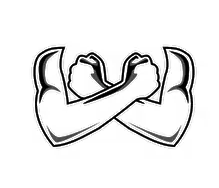
    Universal sign of dismay and denial.

    Competitive games that involve the audience are not without risk. Often the audience will side with the players and not want anyone to “lose.” A boisterous audience will often yell die or fail buzzer a scene they don’t like later.

    Gimmicks

    • Leave the conduction on one player for a long time.
    • Quickly move from player to player

    Variations

    • Gibberish – Seamless gibberish is a real thing.
    • Back Story – Conductor is behind the players tapping their back.
    • Conducted Story – None competitive version of above
    • Word At A Time – each player contributes only one word at a time.

    Credits

    None

Ähnliche Elemente